-
World Cup Dividend: A "North American Opportunity" for China's Cultural Tourism Equipment
April 17,2026
-
Hualong Technology's Intelligent Bionic Dinosaur Designated as Key Project for Zigong's "15th Five-Year Plan" AI Industry
April 07,2026
-
Animatronic Dinosaurs Become Highlight of Spring Festival Tourism
March 20,2026
-
When the ChatGPT Moment Arrives:
March 16,2026
-
Embracing the New Era of Cultural and Tourism Integration
March 10,2026
-
How did the dinosaur survive in the mass extinction?
February 03,2023
-
Brontosaurus footprints were founded in a restaurant in Leshan, Sichuan.
January 31,2023
-
T-Rex Encyclopedia
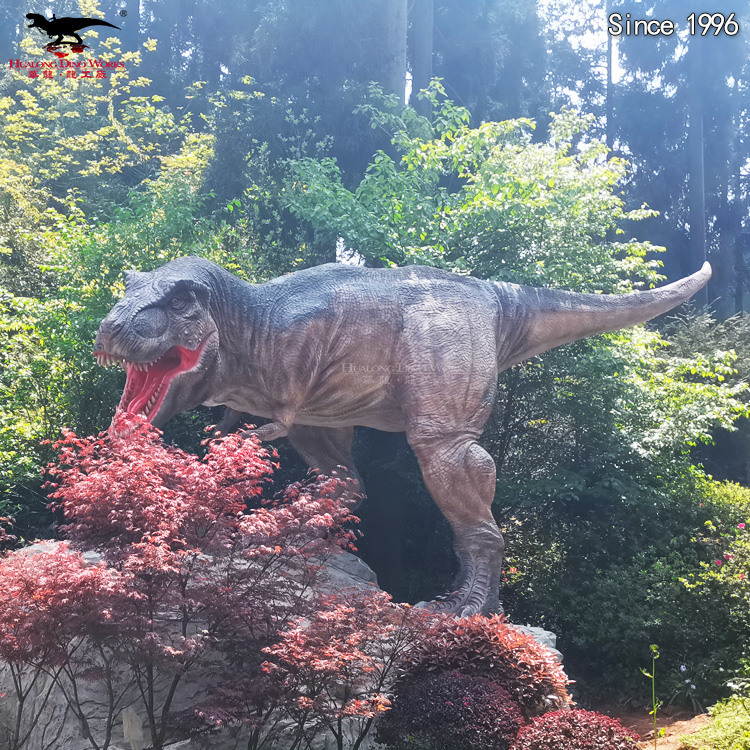
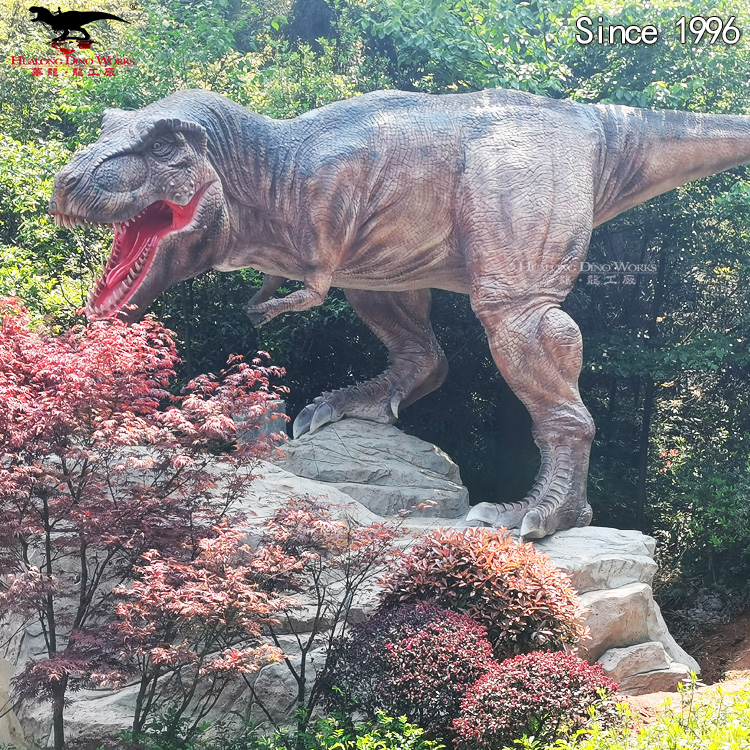
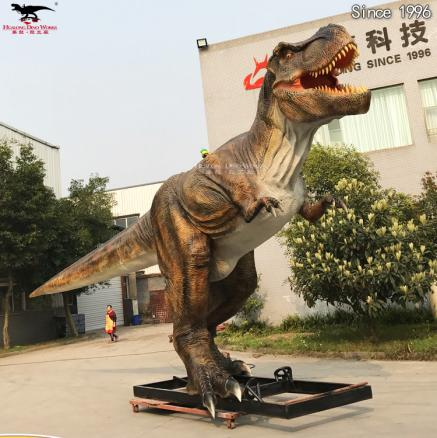
Its scientific name is Tyrannosaurus Rex, also called Tyrannosaurus. It is usually called Tyrannosaurus Rex, one of the most famous dinosaurs in the world. Tyrannosaurus rex lived in the late Cretaceous period. They have an average body length of 11.7 meters, a maximum length of 14.6 meters, an average hip height of 4 meters, a highest hip height of more than 5 meters, an average weight of 11 tons, and a maximum weight of 14.85 tons. They are known in the world. One of the largest carnivorous dinosaurs. In 1902, Barnum Brown, an American dinosaur fossil collector, discovered the bones of the first Tyrannosaurus rex in Hale Creek, Montana, USA. Tyrannosaurus rex has very small forelimbs, only about 80 cm in length. Compared with the huge size and hind limbs of Tyrannosaurus, the forelimbs are very small,they are unable to touch their mouth or feet, which may be useful. Just balance their huge heads. The huge head of the Tyrannosaurus rex has a huge mouth. Their teeth are as big as bananas and their bite force is amazing. According to scientists, the bite force of an adult Tyrannosaurus can reach between 100,000 and 200,000 Newtons, which can be easily They bite through the skin of other dinosaurs and snapped their bones. Probably because of this, we call them Tyrannosaurus. Tyrannosaurus Rex, Tyrannosaurus Rex Restoration PictureTyrannosaurus Rex fossil discovered by Barnum Brown
August 13,2021
-
5 Long-Necked Facts About Mamenchisaurus
China is overstuffed with various amazing dinosaurs, and today let’s take a look at one of these giant creatures.
December 24,2019
-
Paleontologists Find Rare African Dinosaur, New Titanosaur Species
Paleontologists have discovered a new extinct species of the world’s biggest dinosaur group in Africa, but the skeleton tells a strange story. Titanosaurs are most often found in South America, although they have been uncovered all over the globe. Researchers dug up a fossil that was frozen in rock in southwestern Tanzania and dates back between 70 million and 100 million years, according to the National Science Foundation. The rare African dinosaur also has a strange family story: It was more closely related to dinosaur giants in South America than its continental friends. The skeleton, of a species that has been dubbed Shingopana songwensis, was found in rock from the Cretaceous Period. The scientists analyzed its vertebrae, ribs, the upper left arm and part of the left side of the pelvis to find that the creature “exhibits morphology indicating affinities” with South American titanosaurs from the Late Cretaceous, they wrote in the Journal of Vertebrate Paleontology. But it did not have as many features in common with African titanosaurs that lived during the same time or in the same place, suggesting that the African species of these enormous dinosaurs were a diverse group rather than one that all shared a single common ancestor. “There are anatomical features present only in Shingopana and in several South American titanosaurs, but not in other African titanosaurs,” lead study author and paleontologist Eric Gorscak, from the Field Museum of Natural History in Chicago, said in the foundation statement. “Shingopana had siblings in South America, whereas other African titanosaurs were only distant cousins.” Additionally, the titanosaurs from southern Africa also had more in common with South Americans than with northern Africans. The study suggests that means that “tectonically driven separation of the two landmasses may have influenced the development of progressively isolated southern African faunas throughout the Cretaceous.” The continents were not alwa…
September 25,2017