


-
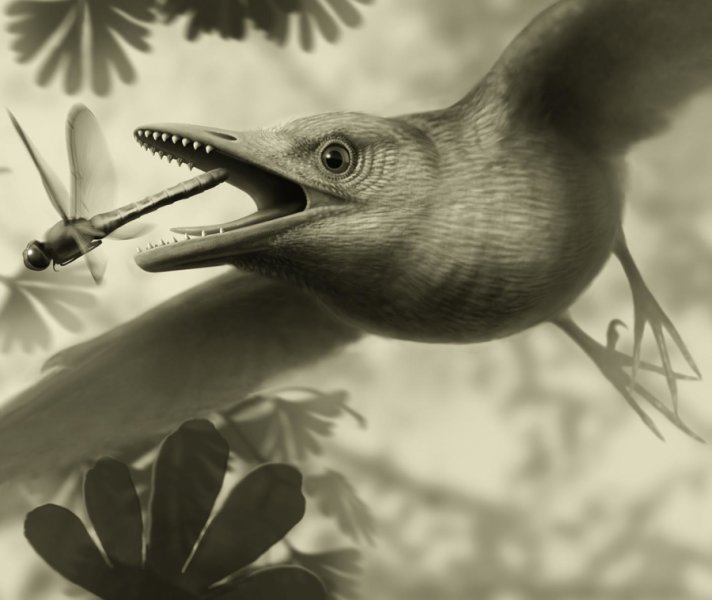
Tiny Ancient Fossil From Spain Shows Birds Flew Over the Heads of Dinosaurs
A new discovery documents the intricate arrangement of the muscles and ligaments that controlled the main feathers of the wing of an ancient bird, supporting the notion that at least some of the most ancient birds performed aerodynamic feats in a fashion similar to those of many living birds.
June 30,2017
-
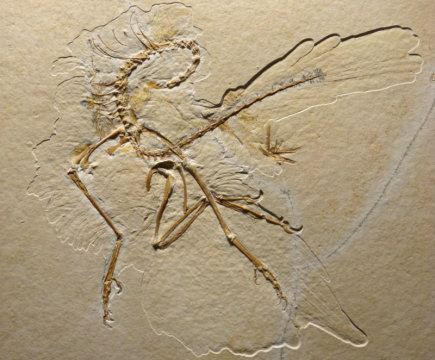
New Specimen of Archaeop Teryx Reveals Previously Unknown Features of the Plumage
Paleontologists are currently studying a new specimen of Archaeopteryx, which reveals previously unknown features of the plumage. The initial findings shed light on the original function of feathers and their recruitment for flight.
June 30,2017
-
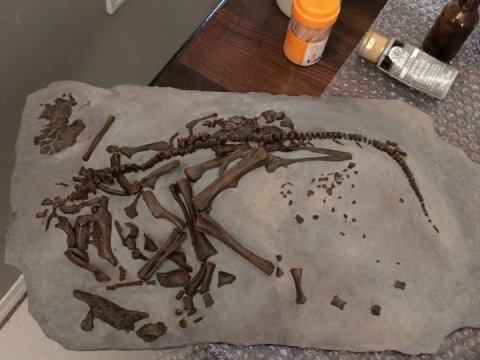
How Long Did It Take to Hatch a Dinosaur Egg? 3-6 Months
A human typically gives birth after nine months. An ostrich hatchling emerges from its egg after 42 days. But how long did it take for a baby dinosaur to incubate?
June 29,2017
-
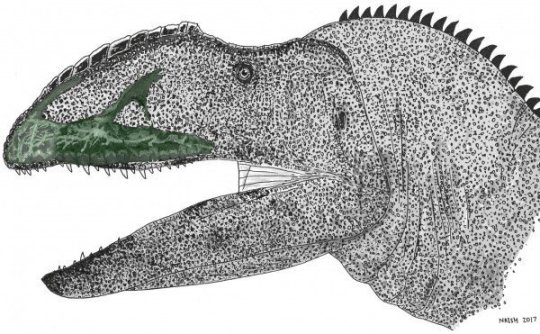
Sensitive Faces Helped Dinosaurs Eat, Woo and Take Temperature
Dinosaurs faces might have been much more sensitive than previously thought, according to a University of Southampton study -- helping them with everything from picking flesh from bones to wooing potential mates.Experts used advanced X-ray and 3D imaging techniques at the Universitys μ-VIS X-Ray Imaging Centre to look inside the fossilised skull of Neovenator salerii -- a large carnivorous land-based dinosaur found on the Isle of Wight -- and found evidence that it possessed an extremely sensitive snout of a kind previously only associated with aquatic feeders.The blood vessels and nerves that supply the head are poorly documented in dinosaur fossils, but the new study published in online journal Scientific Reports shows that Neovenator may have possessed pressure receptors in the skin of its snout -- similar to those which allow crocodiles to forage in murky water.However, nothing about the 125-million-year-old dinosaur suggests it was an aquatic feeder, so researchers believe it must have developed such a sensitive snout for other purposes.University of Southampton graduate Chris Barker, who was studying for his Masters degree in Vertebrate Palaeontology when he carried out the research, said: "The 3D picture we built up of the inside of Neovenators skull was more detailed than any of us could have hoped for, revealing the most complete dinosaur neurovascular canal that we know of."The canal is highly branched nearest the tip of the snout. This would have housed branches of the large trigeminal nerve -- which is responsible for sensation in the face -- and associated blood vessels. This suggests that Neovenator had an extremely sensitive snout -- a very useful adaptation, as dinosaurs used their heads for most activities."As well as being sensitive to touch, Neovenator might also have been able to receive information relating to stimuli such as pressure and temperature, which would have come in useful for many activities -- from stroking each others
June 29,2017
-
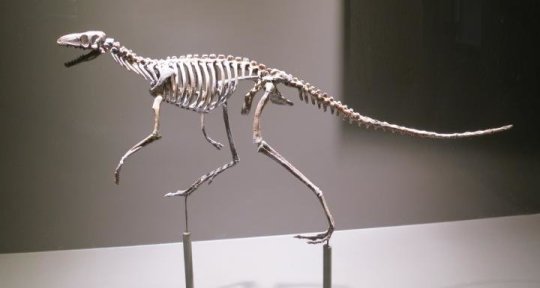
Evolution of Bipedalism in Ancient Dinosaur Ancestors
Paleontologists have developed a new theory to explain why the ancient ancestors of dinosaurs stopped moving about on all fours and rose up on just their two hind legs.
June 28,2017
-
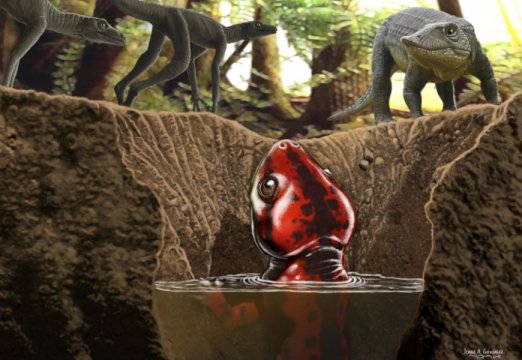
Tiny Fossils Reveal Backstory of the Most Mysterious Amphibian Alive
The fossils of an extinct species from the Triassic Period are the long-missing link that connects Kermit the Frogs amphibian brethren to wormlike creatures with a backbone and two rows of sharp teeth, new research shows. Named Chinlestegophis jenkinsi, the newfound fossil is the oldest relative of the most mysterious group of amphibians: caecilians. Today, these limbless, colorful serpentine carnivores live underground and range in size from 6 inches to 5 feet.
June 28,2017
-
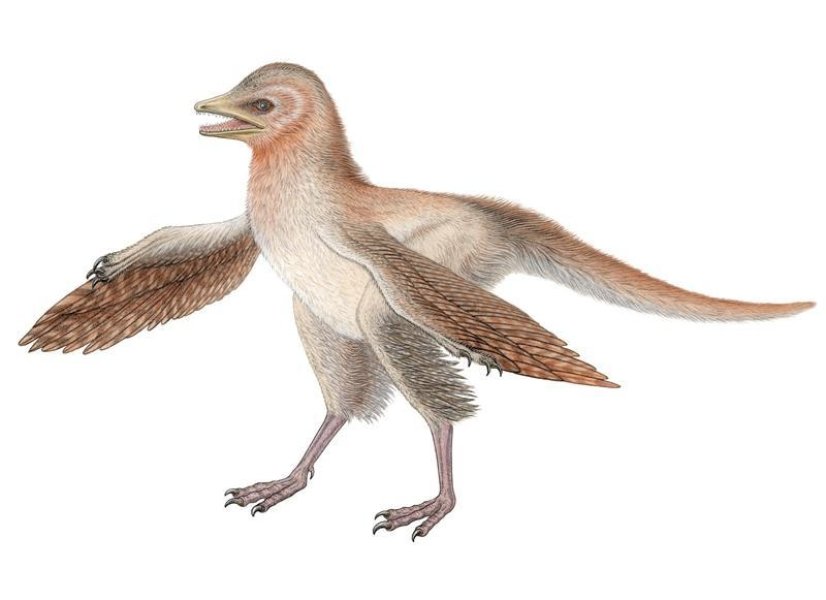
New Dinosaur Fossil Challenges Bird Flight Origins Theories
The discovery of a new bird-like dinosaur from the Jurassic period challenges widely accepted theories on the origin of flight. A new paper describes a new feathered dinosaur about 30 centimeters in length which pre-dates bird-like dinosaurs that birds were long thought to have evolved from.
June 26,2017
-
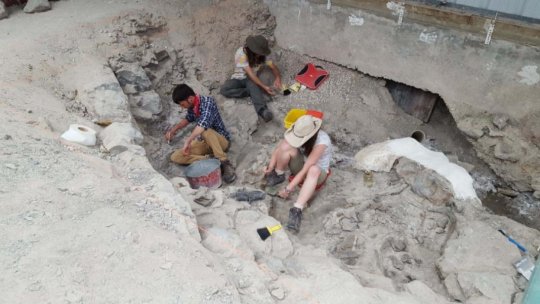
New Data For Old Bones: How the Famous Cleveland-Lloyd Dinosaur Bone Bed cCame to Be
The Cleveland-Lloyd Dinosaur Quarry is the densest collection of Jurassic dinosaur fossils. Since its discovery in the 1920s, numerous hypotheses have been proposed to explain the origin of the quarry. Were the dinosaurs poisoned? Did they die due to drought? Were they trapped in quick sand? A new study suggests that the quarry represents numerous mortality events which brought the dinosaurs to the site over time, rather than a single fatal event.
June 26,2017
-
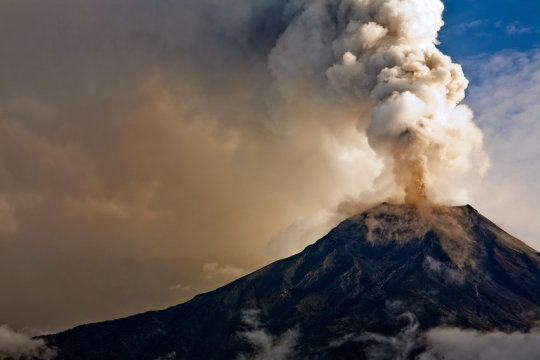
Volcanic Eruptions Triggered Dawn of the Dinosaurs
Huge pulses of volcanic activity are likely to have played a key role in triggering the end Triassic mass extinction, which set the scene for the rise and age of the dinosaurs, new research has found.
June 24,2017
-
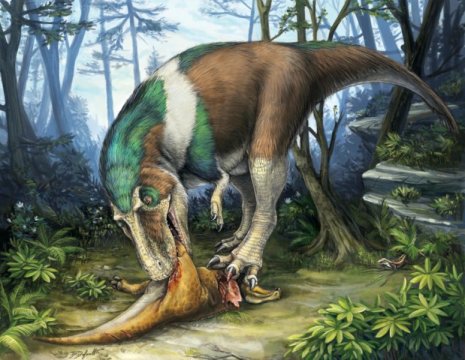
Unique Tooth Structure Allowed Predatory Dinosaurs to Sfficiently Crunch Flesh and Bone
The Tyrannosaurus rex and its fellow theropod dinosaurs that rampage across the screen in movies like Jurassic World were successful predators partly due to a unique, deeply serrated tooth structure that allowed them to easily tear through the flesh and bone of other dinosaurs, says new research from the University of Toronto Mississauga (UTM).The research, published in the journal Scientific Reports, was conducted by Kirstin Brink, a post-doctoral researcher in the Department of Biology at UTM; Professor Robert Reisz of the Department of Biology and the UTM vice-principal of graduate studies; and colleagues at the Royal Ontario Museum (ROM) and the National Synchrotron Radiation Research Center in Taiwan.Brink and her colleagues determined that this deeply serrated--or sawlike--tooth structure is uniquely common to carnivorous theropods such as T. rex and Allosaurus, and even one of the first theropods, Coelophysis. Other extinct animals had teeth that were superficially similar, but it was the special arrangement of tissues inside the tooth that strengthened and improved the function of the teeth. The deep serrations made them much more efficient at chomping on bones and ripping flesh of larger animals and reptiles, and allowed them to prosper for about 165 million years as fearsome, top predators.The only reptile living today that has the same superficial tooth structure is the Komodo dragon, native to Indonesia. It, too, preys on larger animals."What is so fascinating to me is that all animal teeth are made from the same building blocks, but the way the blocks fit together to form the structure of the tooth greatly affects how that animal processes food," Brink said. "The hidden complexity of the tooth structure in theropods suggests that they were more efficient at handling prey than previously thought, likely contributing to their success."She and her colleagues also found that the unique arrangement of tooth tissues did not develop in resp
June 23,2017

